



Read more
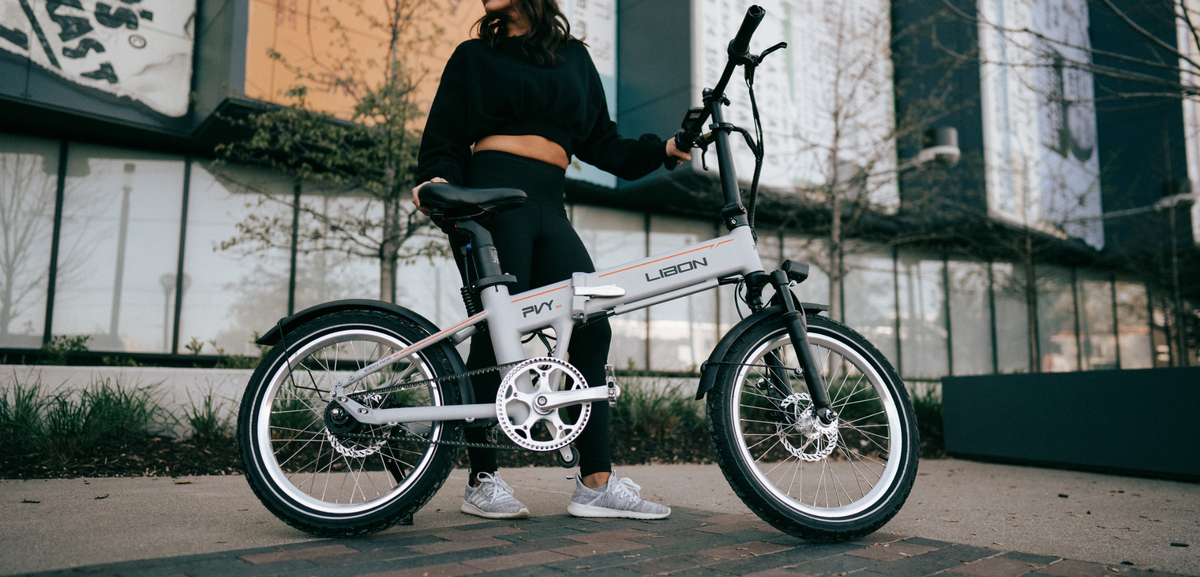


The Science Behind Fat Tires Grip, Stability, and Performance
For years, the sight of a bicycle tire wider than a motorcycle’s seemed like a novelty. Today, fat tires are a mainstream engineering solution, powering everything from beach cruisers to premium electric mountain bikes. But what’s the real science behind their balloon-like appearance? It’s not just about looks—it’s a fundamental rethinking of the tire’s interaction with the ground, trading old assumptions for new capabilities in grip, stability, and performance.
The Core Principle: It’s All About Surface Pressure
The most common misconception is that fat tires are about "flotation" in a vague sense. The precise engineering principle is reducing ground pressure—the force exerted per unit area.
The Formula: Ground Pressure = Total Weight / Contact Patch Area.
The Fat Tire Effect: By dramatically increasing the tire's width (typically 3.8 to 4.8 inches), you create a much larger, oval-shaped contact patch compared to a skinny tire. This distributes the bike's and rider's weight over a greater area, like a snowshoe preventing you from sinking into powder.
This simple physical truth unlocks a cascade of performance benefits.
1. The Grip Revolution: Conformity is Key
A skinny tire, even with aggressive tread, presents a narrow, hard profile to the ground. A fat tire, run at low pressure (often 5-15 PSI), becomes semi-compliant.
Conformity: It molds and conforms to the shape of the terrain—wrapping around rocks, settling into sand, and filling gaps in loose gravel. This dramatically increases the amount of rubber actually in contact with the ground surface, providing mechanical grip that is far superior on unstable terrain.
Traction vs. Slip: The larger contact area also provides more sheer force resistance when accelerating or braking, reducing wheel spin and skidding. This is a key reason why fat-tire e-bikes, like the PVY Z20 PLUS, excel at delivering high-torque power without losing control on loose surfaces.
2. The Stability Equation: Lower Pressure, More Control
Stability on a bike comes from predictable handling and confidence-inspiring contact with the ground. Fat tires contribute in two major ways:
Increased Damping: The large air volume acts as a natural suspension system. Low-pressure tires absorb small bumps, vibrations, and trail chatter before they reach the frame and rider. This reduces fatigue and keeps the tire planted where a stiff tire might bounce and lose contact.
Lean Angle Confidence: The wide footprint provides a supportive feel when cornering. Riders experience a more progressive, predictable lean, as the tire’s profile deforms gradually rather than tucking suddenly. This instills greater confidence on unpredictable surfaces like off-camber trails or snowy corners.
3. The Performance Enabler: Accessing the Inaccessible
This combination of grip and stability redefines what "performance" means. It shifts the priority from pure speed on pavement to capability across all terrains.
The "Float" Effect: On supremely soft surfaces like deep sand, snow, or mud, the tire’s low ground pressure allows it to ride on top of the material rather than cutting down and sinking. This is true flotation, enabling riding where traditional bikes simply cannot go.
Year-Round Versatility: One bike with fat tires can be a true four-season machine. With appropriate tread patterns, it can handle summer trails, autumn leaves, winter snow, and spring mud.

The Trade-Offs: The Laws of Physics Still Apply
The fat tire advantage is not free. The same physics that grant these benefits impose compromises:
Increased Rolling Resistance on Pavement: The larger contact patch and tire deformation create more friction on smooth, hard surfaces. This is the primary reason fat bikes feel slower on roads.
Increased Weight: More rubber and material mean heavier wheels, which affects acceleration and requires more energy to spin up (a factor mitigated by electric assist on e-bikes).
Handling Nuances: The very compliant tires can feel "squirmy" or less responsive during sharp, high-speed cornering on pavement, as the sidewalls deform.
Engineering the Perfect Balance: Smart Bike Design
Modern fat-tire e-bikes don't ignore these trade-offs; they engineer around them.
Optimal Tire Pressure: The key is finding the sweet spot—low enough for grip and comfort, but high enough to minimize drag and squirm. Digital pressure gauges are essential.
Tread Pattern Selection: Aggressive, widely-spaced lugs are for loose terrain; smoother, tightly-spaced center treads improve efficiency on hardpack.
Power Integration: A powerful mid-drive or hub motor, like the 1000W system on the PVY Z20 PLUS, effortlessly overcomes the inherent rolling resistance, making the traction and comfort benefits feel "free."
Suspension Synergy: Many performance fat bikes pair the tires with a front suspension fork. The tire handles small bumps and provides traction, while the fork handles large impacts, creating a supremely capable and comfortable package.
Conclusion: A Tool for a New Kind of Ride
The science reveals that fat tires are not a gimmick, but a specialized tool engineered for a specific purpose: maximizing control and confidence in variable and low-traction conditions.
They represent a shift from the "minimalist" road-bike philosophy to an "all-terrain" approach, prioritizing versatile performance over pure efficiency. For the urban explorer, winter commuter, or off-road adventurer, the physics of the fat tire unlocks landscapes and experiences that were once out of reach, proving that sometimes, to go further, you need a bigger footprint.